
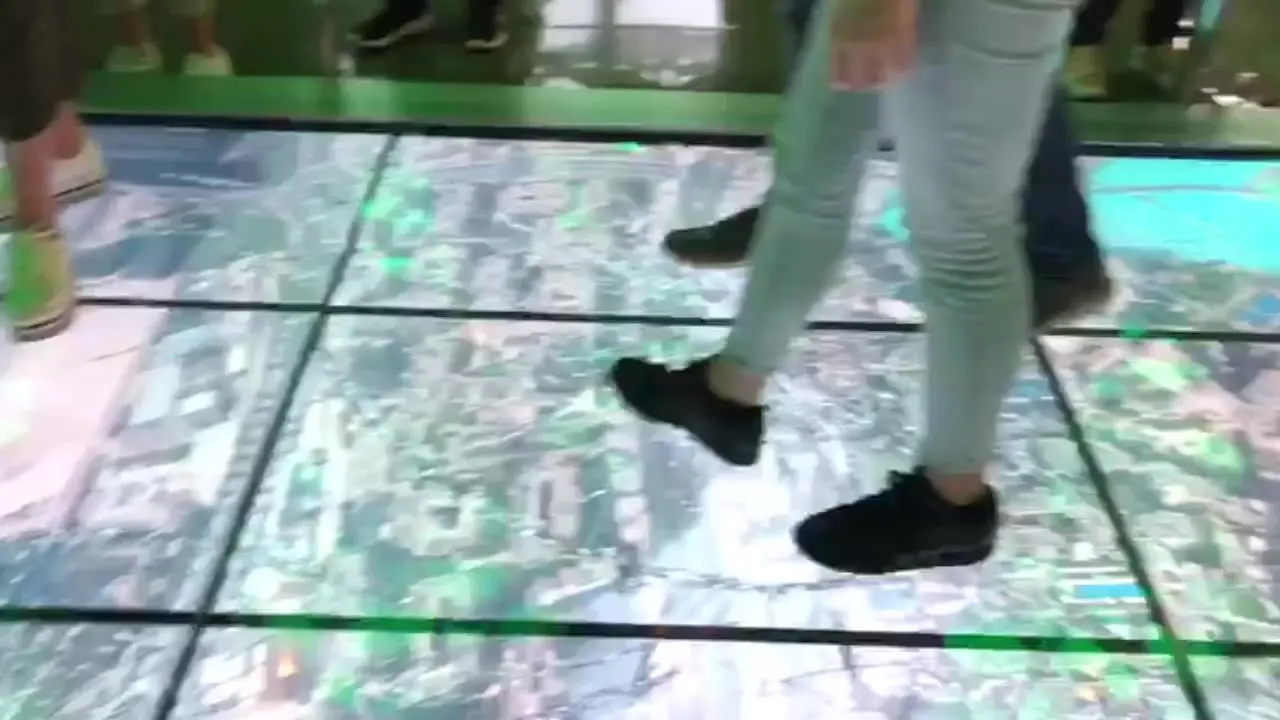
At Burj Khalifa, DigiComm built an interactive floor that has to work as architecture, not as a gadget. LED tiles under glass show a high-resolution aerial of Dubai. As people walk, the surface responds — including the glass-cracking behaviour that became the installation’s signature.
The engineering problem is not the effect. It is load, heat, pixel pitch, content resolution, sensor latency and maintenance access in a venue that never empties. The floor is a grid of walkable LED modules with interactive lighting triggered by presence, so the map stays a map until someone steps on it.
This is the reference we use for observation-deck, museum and flagship-retail floors: content designed for the tile grid, playback that stays in sync, and an interaction that reads instantly to a visitor who is not there to read a manual.
Technology
- Walkable LED tiles
- Interactive presence triggers
- Synchronised playback